
MORE WORK NEEDED TO REDUCE INEQUITY IN HEALTHY AGEING INTERVENTIONS
A new systematic review examines how equity-related factors, such as place of residence, ethnicity, and education, are incorporated into healthy ageing interventions and whether outcomes differ across population groups.
Population ageing and the growing number of people living with multiple chronic conditions pose major challenges to healthy ageing. These challenges are further intensified by fragmented health and social care systems that often operate in silos. In response, interventions to support healthy ageing among older adults have increased, particularly those targeting physical activity, self-management, and social functioning, including the ability to participate and engage with society. Previous reviews suggest that some healthy ageing interventions may be more beneficial than others.
Health inequities arising from social determinants such as income, education, gender, and socioeconomic status have a profound effect on disease and ageing outcomes. Despite global efforts to promote equitable healthy ageing, substantial gaps remain.
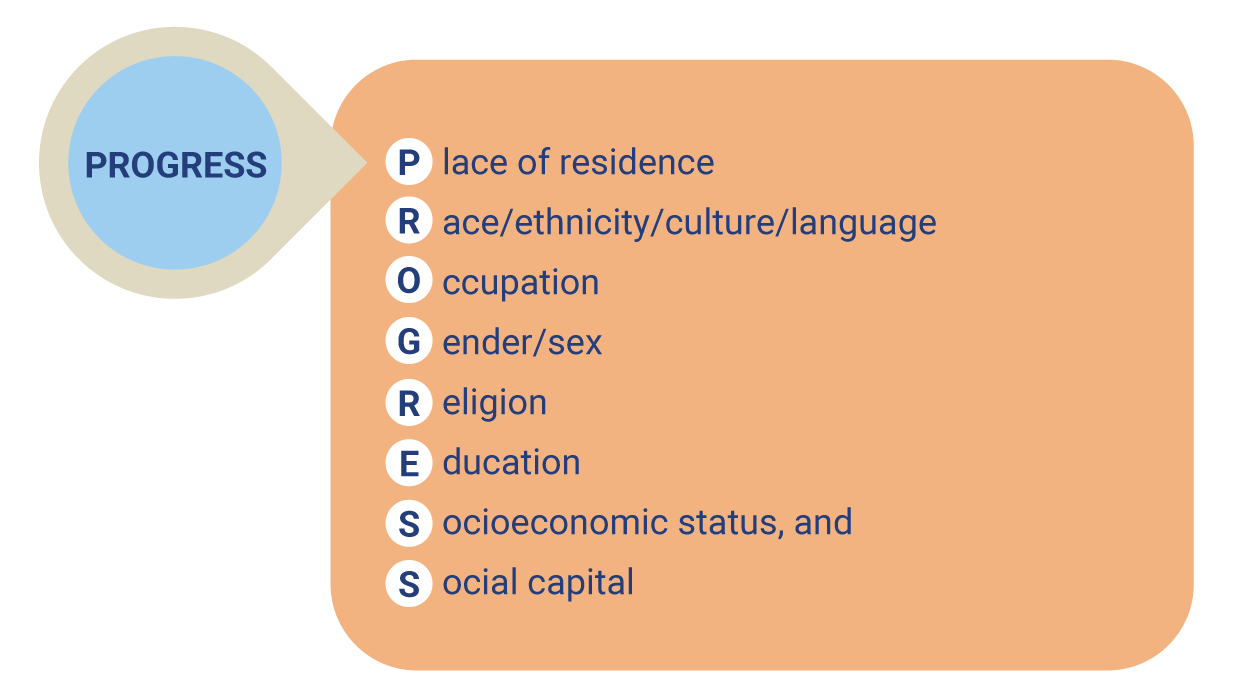
A new systematic review from the STAGE Project, led by the University of Haifa in collaboration with the Technical University of Munich, examined how equity-related factors are incorporated into evaluations of healthy ageing interventions and whether outcomes differ across groups. These factors were defined using the PROGRESS framework: Place of residence, Race/ethnicity/culture/language, Occupation, Gender/sex, Religion, Education, Socioeconomic status, and Social capital, as outlined in Figure 1.

Figure 1
WHAT WE DID
The review involved sixty-six studies published between 2001 and 2026, with two-thirds published from 2018 onwards. The average number of participants per intervention was 250, and most studies included older adults, with a mean age of 71.4 years. Study populations varied considerably and included people with chronic physical conditions, mental health conditions, disability, frailty, multiple chronic conditions, and those in generally good health
WHAT WE FOUND
Among the interventions analysed using the PROGRESS framework, 39% appeared to reduce inequities, 4% appeared to increase inequities, and almost 60% showed no clear differences in outcomes between population groups. The type of intervention also appeared to matter. Of the six intervention types, physical activity interventions showed the largest number of favourable findings related to reducing inequities. In contrast, social connectedness interventions showed the highest number of unfavourable findings, suggesting that these interventions may not benefit all groups equally.
Examples of intervention outcomes showing reduced inequity include one study in which participants living in more deprived areas showed greater improvement in steps per day, and another study in which groups with lower incomes showed greater improvement in disability and mobility outcomes. In contrast, one social connectedness intervention found no significant overall effects, but showed reductions in loneliness and increases in social activities only among older adults with higher education and income, thereby exacerbating inequities.
Lead author Chava Kurtz said: “Only 62% of the studies we examined analysed at least one inequity dimension, and detailed equity analyses remained limited. The scarcity of evidence on how interventions affect socially disadvantaged subgroups is particularly concerning given the well-documented challenges of healthy ageing and the disproportionate number of people living with multiple health conditions in these populations.”
These findings have important implications for future intervention planning. Explicitly integrating equity dimensions, particularly underrepresented factors such as occupation, religion, and place of residence, and considering how these factors overlap, can improve both the inclusivity and effectiveness of public health and healthcare interventions.
PAPER
Kurtz, C., Ben Harush, O., Zisberg, A. et al. Toward Inclusive Healthy Ageing: A Systematic Review of Equity in Healthy Ageing Interventions. Int J Equity Health (2026).